How Custom Data Extraction Supports Business Automation Workflows
Introduction
Automation sounds effortless in theory—until messy, inconsistent data enters the picture and suddenly everything feels far less automated. Businesses often invest heavily in workflow automation tools, only to discover that unreliable data quietly disrupts the entire system. That’s where Custom data scraping services step in, transforming scattered information into structured, usable inputs. We’ve seen workflows go from chaotic to streamlined simply by fixing the data layer first. Because, let’s face it—automation without clean data is just fast-moving confusion. And no one really wants that (except maybe spreadsheets with a sense of humor).
Understanding Business Automation Workflows (a quick reality check)
Business automation workflows are essentially a series of connected tasks designed to run with minimal human intervention. From CRM updates to inventory alerts, everything depends on smooth data flow. However, workflows tend to break at the most inconvenient times, usually when deadlines loom large. The underlying issue is rarely the automation tool—it’s the data feeding into it. Poor-quality data leads to errors, delays, and inefficiencies. So while automation promises speed and efficiency, it quietly demands accuracy and consistency behind the scenes.
What Is Custom Data Extraction (and why generic tools don’t cut it)
Custom data extraction focuses on gathering specific, structured information tailored to business needs, rather than relying on generic, one-size-fits-all tools. Off-the-shelf scrapers often deliver inconsistent or irrelevant data (which looks impressive—until it isn’t). Tailored solutions, on the other hand, adapt to complex website structures, dynamic content, and unique requirements. We once worked with a system that collected thousands of data points daily—none of which were actually useful. That experience made one thing clear: precision matters far more than volume when it comes to automation success.
The Link Between Data Extraction and Automation (the missing puzzle piece)
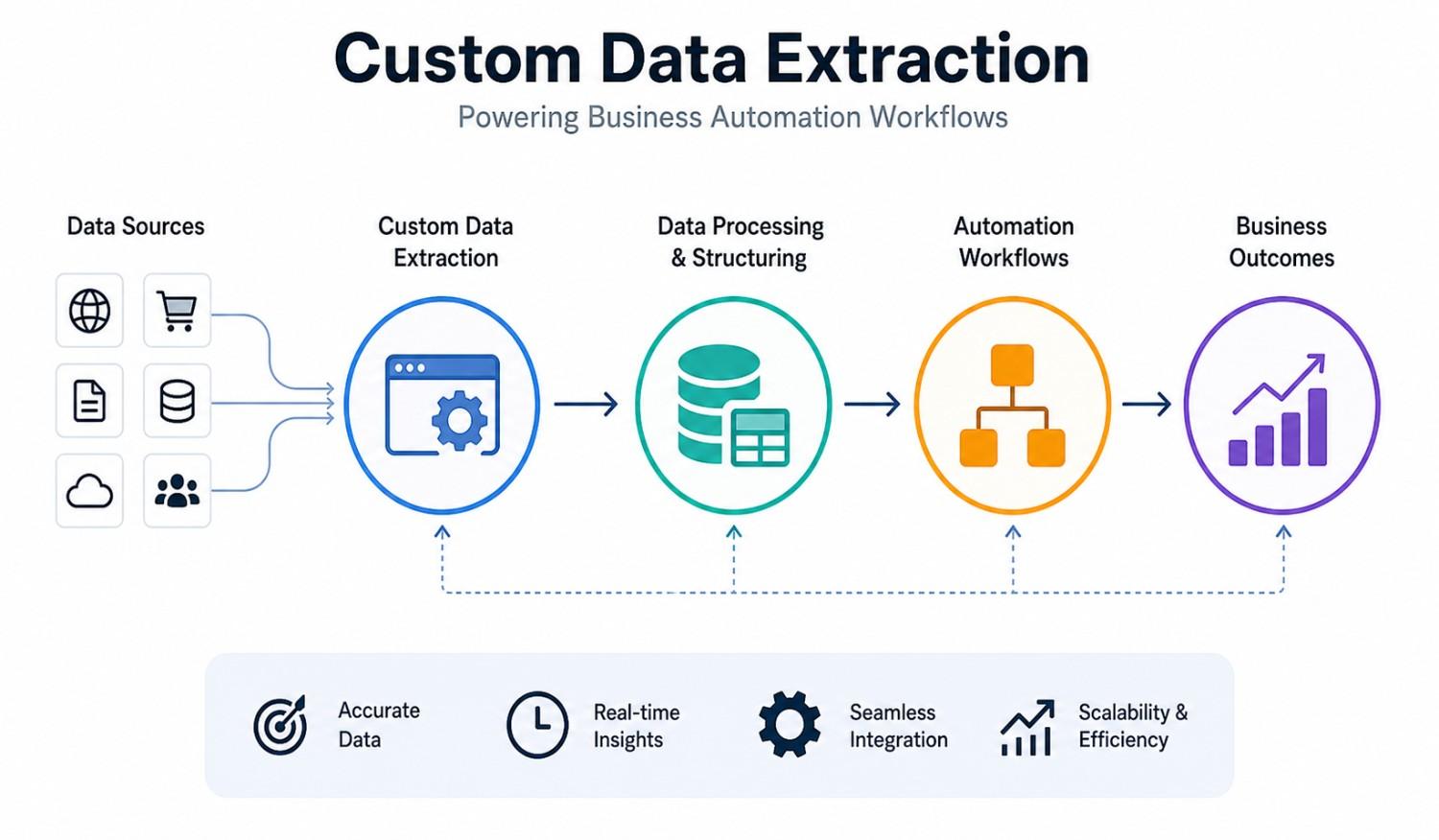
Automation workflows rely heavily on consistent, real-time data inputs to function effectively. Without proper data extraction, even the most advanced automation systems struggle to deliver results. The process is fairly straightforward—data gets extracted, processed, and then fed into automated workflows for execution. Here’s where things get interesting—when the extraction process is optimized, everything downstream becomes smoother, faster, and more reliable. In other words, automation isn’t just about tools; it’s about feeding those tools with the right information at the right time.
Key Ways Custom Data Extraction Supports Automation Workflows
Real-Time Data Integration (because outdated data is just… history)
Real-time data integration ensures that automation workflows operate with the most current information available. Instead of relying on outdated datasets, systems can react instantly to changes in pricing, inventory, or market conditions. This responsiveness improves decision-making and operational efficiency. Automation becomes more dynamic, adapting to real-world scenarios without delays. Because in fast-moving industries, yesterday’s data isn’t just old—it’s irrelevant.
Data Accuracy and Consistency (good data = fewer headaches)
Accurate and consistent data forms the backbone of any successful automation workflow. When data is clean and standardized, processes run smoothly without constant manual corrections. Errors are minimized, and reliability improves across systems. There’s a noticeable difference between workflows that require constant monitoring and those that simply… work (a rare but satisfying experience). Clean data eliminates unnecessary complications and ensures automation delivers on its promise.
Seamless Integration with Business Systems (ERP, CRM, etc.)
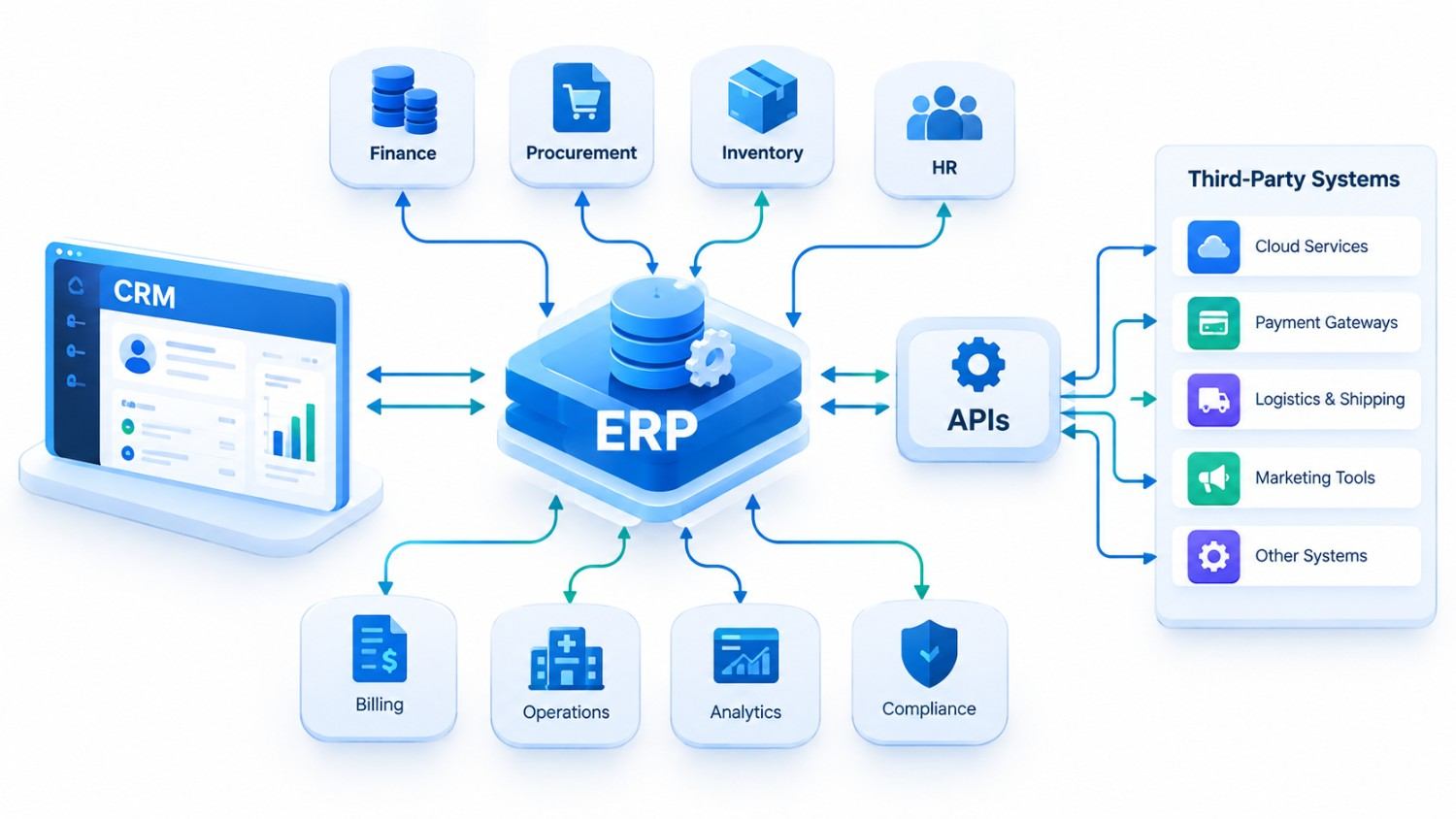
Custom data extraction allows seamless integration with business systems such as ERP and CRM platforms. Extracted data can be directly fed into these systems, enabling automated updates and real-time insights. This eliminates manual data entry and reduces operational friction. The result is a unified ecosystem where information flows effortlessly between systems. And when systems actually communicate with each other (instead of working in silos), productivity tends to improve dramatically.
Scalability for Growing Operations (because growth shouldn’t break systems)
As businesses grow, data volumes increase—and so do the complexities of managing them. Custom extraction solutions are designed to scale alongside operations, handling large datasets without compromising performance. Automation workflows remain stable even as demands expand. Growth no longer disrupts processes; instead, systems adapt seamlessly. Because scaling a business should feel like progress—not like trying to fix a system that suddenly decided it prefers chaos.
Customization for Industry-Specific Needs (one size fits… almost no one)
Different industries require different types of data, and custom extraction solutions address these unique needs effectively. Whether it’s eCommerce product data or financial market insights, tailored approaches ensure relevance and accuracy. Generic tools often fail to capture nuanced requirements, leading to incomplete or unusable data. Customization bridges that gap, aligning data extraction with specific business goals. Because what works perfectly for one industry might be completely useless for another (and sometimes hilariously so).
Real-World Use Cases (where things actually work—surprisingly well) eCommerce Automation
Custom data extraction enables automated price tracking, inventory updates, and competitor monitoring. Businesses can adjust strategies in real time based on accurate data. Automation reduces manual effort while improving responsiveness to market changes.
Finance and Market Intelligence
Financial institutions rely on automated data collection for insights, forecasting, and risk analysis. Custom extraction ensures timely and reliable data inputs, supporting informed decision-making.
Lead Generation and Sales Automation
Extracted customer data feeds directly into CRM systems, enabling automated lead nurturing and follow-ups. Sales teams benefit from accurate, up-to-date information without manual intervention.
Anecdote / Observation (Kanhasoft-style storytelling moment)
A mid-sized business once relied on manual data entry to update its CRM—an approach that worked well until growth made it completely unsustainable. Data inconsistencies became frequent, and automation workflows started failing (quietly at first, then dramatically). After implementing a custom extraction solution, the transformation was immediate. Processes stabilized, errors dropped, and productivity improved. It wasn’t exactly a magical moment—but it certainly felt close. Sometimes, fixing the data layer changes everything (even if it doesn’t get the spotlight it deserves).
Challenges in Data Extraction (because nothing is ever that simple)
Data extraction comes with its fair share of challenges, including dynamic website structures, anti-scraping mechanisms, and inconsistent data formats. Maintaining accuracy and scalability requires continuous monitoring and updates. Even well-designed systems need occasional adjustments. But here’s the good news—these challenges are manageable with the right approach and expertise. With proper planning, businesses can overcome these hurdles and build reliable data pipelines that support long-term automation goals.
Best Practices for Implementing Custom Data Extraction in Automation
Successful implementation begins with clearly defined data objectives and requirements. Systems should be designed for scalability and flexibility, ensuring they can adapt to changing needs. Compliance with data regulations is essential, as is maintaining ethical extraction practices. Regular monitoring helps identify issues before they escalate. And despite the temptation, “set it and forget it” rarely works—consistent optimization is key to maintaining efficiency.
SEO, AEO, and GEO Benefits of Data-Driven Automation
Structured and accurate data enhances search engine visibility by improving content relevance and consistency. Automation workflows ensure timely updates, which search engines favor. Answer engine optimization benefits from precise data delivery, making it easier to provide direct responses to user queries. Geo-targeted insights allow businesses to tailor strategies based on location-specific trends. In short, better data leads to better visibility—and that’s always a worthwhile outcome.
Future of Automation with Custom Data Extraction (a peek ahead)
The future of automation is increasingly tied to intelligent data extraction powered by AI and machine learning. Systems will become more adaptive, capable of handling complex data environments with minimal intervention. Predictive analytics will further enhance decision-making, enabling proactive strategies rather than reactive ones. Automation will continue to evolve, becoming smarter and more efficient over time. And while perfection might still be out of reach, progress is definitely heading in the right direction.
Conclusion
Automation works best when supported by reliable, structured data—anything less tends to create more problems than it solves. Custom data extraction plays a critical role in ensuring workflows remain efficient, scalable, and accurate. When implemented correctly, it transforms automation from a hopeful experiment into a dependable system. Because in the end, automation isn’t really magic—it just feels like it when everything finally works the way it should.
FAQs
- What is custom data extraction?
Custom data extraction is the process of collecting specific data from various sources and structuring it according to business requirements for better usability and automation.
- How does data extraction improve automation workflows?
It ensures accurate, consistent, and real-time data inputs, which help automation systems operate efficiently without errors or delays.
- Is custom data extraction scalable?
Yes, it is designed to handle increasing data volumes and adapt to growing business needs without affecting performance.
- What industries benefit the most from data extraction?
Industries such as e-commerce, finance, healthcare, and marketing benefit significantly from tailored data extraction solutions.
- .Are there risks involved in web data extraction?
Challenges include compliance issues, website changes, and data inconsistencies, but these can be managed with proper strategies and tools.